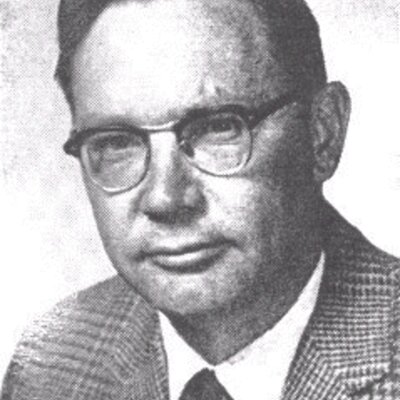
James E. McDonald
Senior Atmospheric Physicist
BIOGRAPHY
Established atmospheric physicist with no fringe baggage; his case-by-case interview methodology remains a standard. The fact that an active senior scientist with that pedigree spent his last years as a public UFO advocate is itself the data point.
NOTABLE CONTRIBUTIONS (3)
Congressional testimony on UFOs
Testified before the U.S. House Committee on Science and Astronautics that UFOs represented 'the greatest scientific problem of our times' and that the Air Force's investigation was inadequate.
500+ witness case investigations
Personally interviewed pilots, military radar operators, and police officers in cases like RB-47 (1957) and Lakenheath-Bentwaters (1956). His written case reports remain primary sources.
Critique of the Condon Report
McDonald led the scientific demolition of the Condon Committee's methodology, arguing publicly and in technical journals that its conclusions did not follow from its own data.
PUBLICATIONS (3)
Statement on UFOs to the House Committee on Science and Astronautics
1968UFOs: An International Scientific Problem
1968 • Astronautics SymposiumScience in Default: Twenty-Two Years of Inadequate UFO Investigations
1969TIMELINE (4)
Joins University of Arizona
Senior physicist at the Institute of Atmospheric Physics; recognized expert on cloud microphysics.
Begins systematic UFO research
Starts a multi-year program of witness interviews and case re-investigation.
Congressional testimony
Delivers landmark testimony to the House Committee on Science and Astronautics.
Death
Dies by suicide at age 51 following a personal crisis.
KEY QUOTES (2)
“My present opinion, based on two years of careful study, is that UFOs are probably extraterrestrial devices engaged in something that might very tentatively be termed 'surveillance.'”
House Committee on Science and Astronautics testimony•1968-07-29
“The UFO problem is, far and away, the greatest scientific problem of our times.”
House Committee on Science and Astronautics testimony•1968-07-29